 Gulte Movie News And Politics
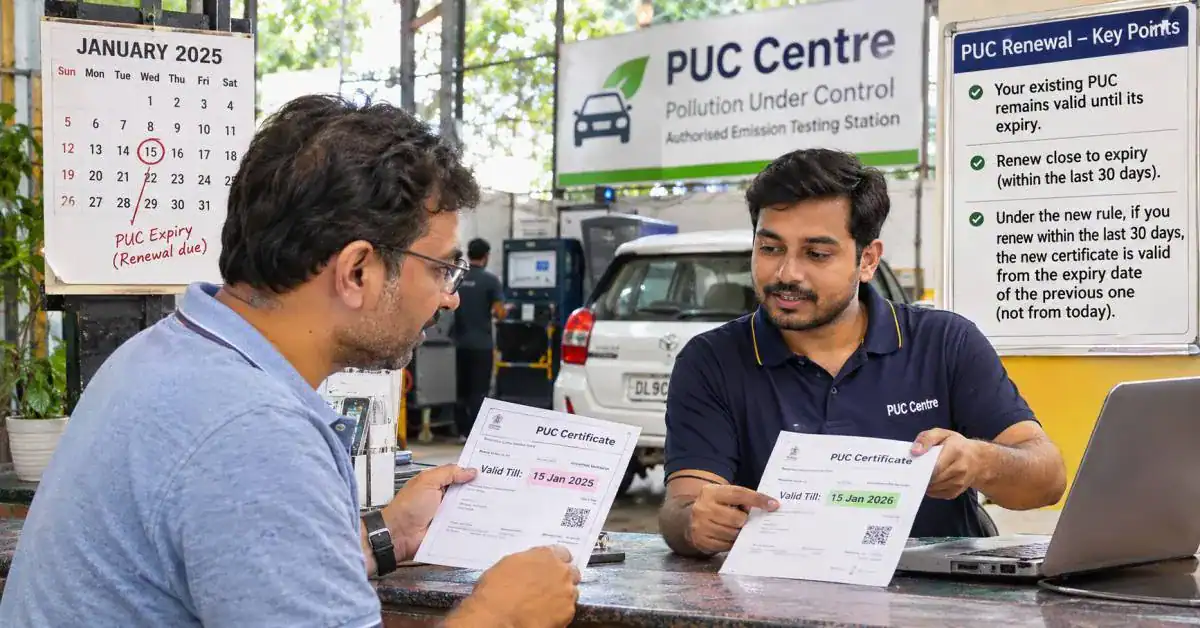
Vehicle owners across India may no longer have to renew their Pollution Under Control (PUC) certificates as frequently as before. The Central Government has introduced a revised validity schedule for PUC certificates, with newer BS-VI vehicles getting longer validity periods while older vehicles will have to undergo emission checks more frequently.
The Ministry of Road Transport and Highways notified the Central Motor Vehicles (Sixteenth Amendment) Rules, 2026, through Gazette notification G.S.R. 991(E), dated November 13, 2026. Under the revised rules, the validity of a PUC certificate will depend on the vehicle’s emission standard, age and whether it is a private or commercial vehicle.
How long will your PUC certificate remain valid?
The revised schedule offers the longest validity to newer BS-VI private vehicles.
Private BS-VI vehicles up to six years old can receive PUC certificates valid for three years. Vehicles between six and ten years old will get one-year validity, while those older than ten years will have to renew their certificates every six months.
For commercial BS-VI vehicles, the validity is two years for vehicles up to six years old, one year for vehicles between six and ten years, and six months for vehicles older than ten years.
The rules also prescribe three-month validity for BS-I, BS-II and BS-III vehicles, while BS-IV vehicles will receive six-month certificates.
In simple terms, a relatively new BS-VI private car or motorcycle could get a three-year PUC certificate, whereas an older vehicle may have to undergo emission testing twice a year.
What happens to existing PUC certificates?
The revised schedule does not automatically extend the validity of certificates that have already been issued. Existing certificates remain valid until their stated expiry dates, with the revised schedule applying at the subsequent renewal.
The amendment also introduces a 10-day renewal window. If a vehicle owner renews the certificate during the 10 days before its expiry, the new certificate’s validity will begin from the expiry date of the previous certificate. This prevents motorists from losing validity days by renewing early.
However, if the certificate has already expired, the new validity period will begin from the date of renewal.
What does this mean for motorists in Telangana and Andhra Pradesh?
The revised rules apply across the country, including Telangana and Andhra Pradesh. Vehicle owners in Hyderabad, Vijayawada, Visakhapatnam and other cities will follow the same central validity schedule.
The changes do not mean that newer BS-VI vehicles are exempt from pollution testing. They will still require valid PUC certification, but the frequency of renewal will be lower.
The government’s revised approach effectively links the frequency of emission testing to the vehicle’s age and emission standard. While newer vehicles receive longer certification periods, older vehicles will face more frequent checks.
For motorists, the immediate takeaway is simple: check your vehicle’s Bharat Stage classification, first-registration date and current PUC expiry date before assuming that you qualify for the extended validity.