 Gulte Movie News And Politics
India is preparing for an aviation boom, but there is one problem: it doesn’t have enough aircraft to meet its ambitions. Commerce and Industry Minister Piyush Goyal’s statement on November 16 brings this challenge into focus. Speaking to reporters in Cairo, Goyal said Indian airlines had already ordered more than 1,200 aircraft and were prepared to order another 1,000. He said the country needed more than 2,000 aircraft to meet its requirements and that the government was pursuing established global manufacturers to speed up deliveries.
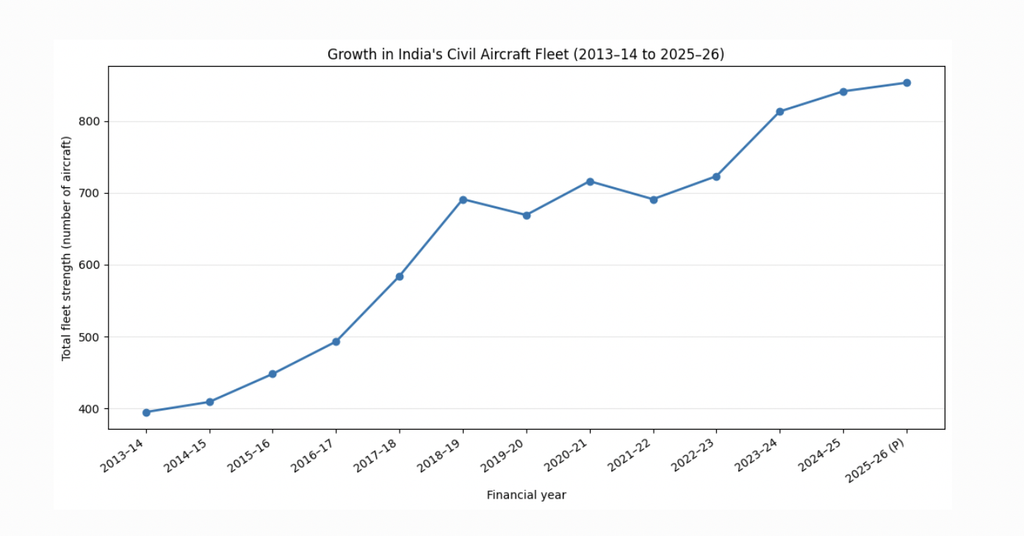
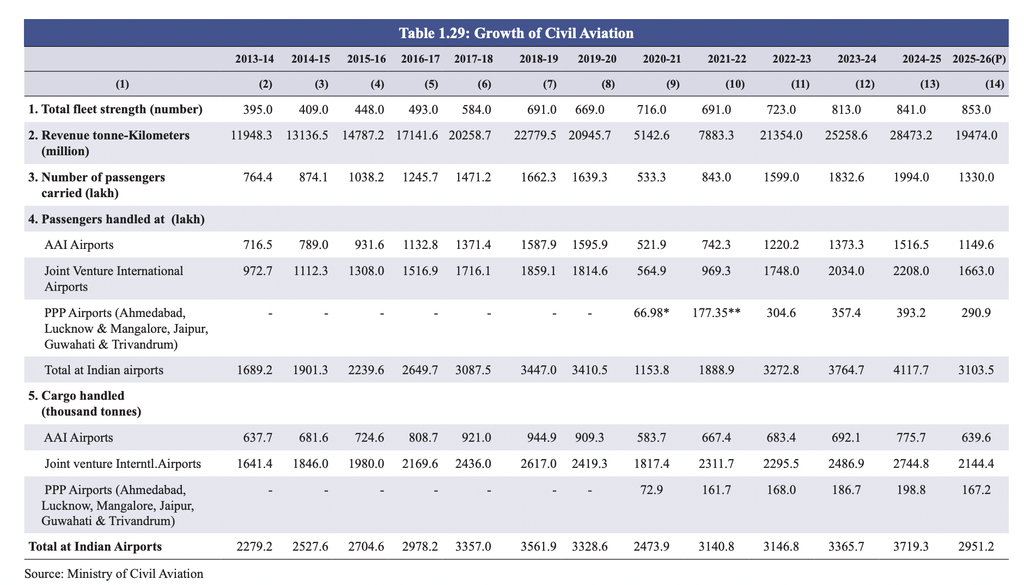
The statement is significant because India’s aviation market has grown considerably over the last decade, and airlines are betting that demand will continue to rise. In 2013-14, India had a civil aircraft fleet of 395 and in 2025-2026, the number is 853. The number of passengers carried was 7.64 crore in 2013-2014 and it has almost doubled in 2025-2026 to 13.3 crore.
More Indians are flying, smaller cities are increasingly being connected to major urban centres, and international travel is becoming a bigger part of the market. But expanding an airline’s network is not as simple as announcing new routes. Airlines need aircraft, and getting them is proving to be a challenge.
To understand the scale of India’s ambitions, look at the size of its existing fleet. In August 2025, the Ministry of Civil Aviation told Parliament that scheduled Indian airlines were operating 846 aircraft. The number has since increased, but it gives an idea of the scale of expansion being planned. The government has also cited a requirement for more than 2,000 aircraft. In other words, India is looking at a substantial increase in its commercial aviation capacity over the coming years.
Much of this expansion is being driven by IndiGo and the Air India Group. IndiGo has placed some of the biggest aircraft orders in aviation history, including an order for 500 Airbus A320-family aircraft in 2023. It also ordered 30 Airbus A350s in 2024 as it prepares to expand its international operations. Its order book included 901 aircraft awaiting delivery as of March 2026. Air India, meanwhile, placed a historic order for 470 aircraft from Airbus and Boeing in 2023 as part of its attempt to rebuild and expand its operations following privatisation. Akasa Air has also placed orders for 226 Boeing 737 MAX aircraft.
However, these orders do not mean thousands of new aircraft will suddenly appear in Indian airports. Deliveries are spread over several years, and manufacturers themselves are struggling to meet demand. Airbus and Boeing have been dealing with production delays, shortages of components and difficulties securing enough aircraft engines. Modern passenger aircraft involve thousands of specialised components sourced from suppliers across different countries. A shortage of even one critical component can delay the delivery of an entire aircraft.
This creates a difficult situation for Indian airlines. They have orders on the books and plans to expand domestic and international operations, but their ability to execute those plans depends on how quickly manufacturers can deliver. It also explains why Goyal’s emphasis on faster supplies matters. India is not merely looking to place more orders; it wants manufacturers to prioritise deliveries to a market that is becoming increasingly important to the global aviation industry.
There is another interesting dimension to this development. India wants to become more than just a major buyer of aircraft. It wants a bigger role in the global aerospace manufacturing business. Airbus and Boeing already source components and services from Indian companies, but manufacturing a complete commercial passenger aircraft is a very different proposition. It requires specialised engineering capabilities, a sophisticated supplier ecosystem, enormous investments and years of certification and testing.
Recent developments indicate that India is exploring this possibility. Brazilian aircraft manufacturer Embraer has entered into a strategic collaboration with the Adani Group to explore regional aircraft manufacturing in India. Airbus, meanwhile, has expanded its manufacturing and assembly presence in the country, including its C295 military transport aircraft programme with Tata Advanced Systems. These developments could help strengthen India’s aerospace ecosystem, although they should not be confused with the domestic production of commercial passenger jets.
For passengers, the expansion could eventually translate into more flight options, better connectivity and increased competition between airlines. Smaller cities could get better access to major business centres, while Indian carriers could expand their international networks. But aircraft availability is only one part of the equation. Airport capacity, pilot availability, maintenance infrastructure, air traffic management and the financial health of airlines will also determine how quickly this expansion happens.
Goyal’s statement basically indicates where India expects its aviation industry to be in the coming years. The country is ready to order more aircraft, and its airlines have already made enormous commitments. The bigger question is whether global manufacturers can deliver them fast enough, and whether India can build the infrastructure and manufacturing capabilities needed to support an aviation market of that scale.
For now, India’s requirement and appetite for aircraft is clearly not the problem. Getting enough of them, in time, is.
Latest Articles






Tags Indian Aircrafts