 Gulte Movie News And Politics
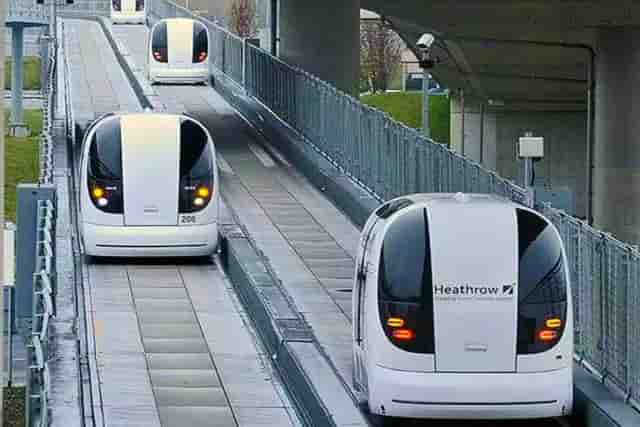
Hyderabad could soon have another mode of public transportation, one that does not involve conventional trains, buses or even drivers. The Telangana government is exploring a 35-kilometre Personal Rapid Transit System (PRTS), comprising small, driverless electric vehicles operating on dedicated elevated tracks. The first phase of the proposed network will connect Kukatpally with Knowledge City through Raidurg and Biodiversity Junction, with 64 stations planned along the corridor.
The proposal comes as Hyderabad’s public transportation network caters to millions of passenger journeys every day. The Telangana State Road Transport Corporation (TGSRTC) carries approximately 30 lakh passengers daily within Greater Hyderabad limits, while Hyderabad Metro handles around 4.5-5 lakh passenger trips every day.
The proposed PRT network is being planned as an additional mode of transportation, with integration between Metro Rail, RTC buses and other transport services forming part of the government’s broader urban mobility plan.
What is Personal Rapid Transit?
Personal Rapid Transit is an automated public transportation system in which small electric vehicles, commonly called pods, carry passengers along dedicated guideways. Unlike conventional Metro trains, which operate on fixed routes and stop at multiple stations, PRT vehicles are designed to transport passengers directly between selected stations.
Passengers board a pod at a designated station, select their destination and travel to it without having to stop at every intermediate station. The vehicles operate without drivers and are controlled through an automated system.
Depending on the technology and design, these vehicles can carry small groups of passengers. The guideways can be elevated, at ground level or built using other dedicated infrastructure. Hyderabad’s proposal envisages elevated corridors. The system is intended to provide connectivity between Metro stations, commercial centres, office complexes and other high-density activity centres.
How much do Hyderabad’s existing public transport systems carry?
TGSRTC currently carries around 30 lakh passengers every day within Greater Hyderabad limits, according to figures shared by the state government during the launch of the common MeeTicket facility in October 2026. The corporation operates city bus services across residential, commercial and industrial areas, connecting commuters to different parts of the city.
The Metro, meanwhile, handles approximately 4.5-5 lakh passenger trips daily across its three operational corridors. Its 69-km network has 57 stations, covering major residential and commercial areas.
The western IT corridor also accounts for a significant share of bus movement. TGSRTC operates approximately 390 buses across 88 routes connecting different parts of Hyderabad to Gachibowli, Wipro, Raidurg and Kondapur. These services undertake around 2,477 trips every day and carry approximately 1.5 lakh passengers travelling to and from the IT corridor. These figures provide an overview of the existing public transport network that the proposed PRT system is expected to integrate with.
Which areas will the proposed network cover?
The proposed 35-km Phase-I network will connect Kukatpally and KPHB with the western IT corridor. The route includes Raidurg, Durgam Cheruvu, Raheja Mindspace, Biodiversity Junction and Knowledge City.
The Chief Minister had specifically directed officials to take up a PRT corridor connecting KPHB Metro Station, Durgam Cheruvu, Raheja Mindspace and Biodiversity Metro Station. The November 18 presentation outlined a larger 35-km Phase-I network with 64 stations, extending towards Knowledge City.
A multi-level parking facility and a PRT depot have also been proposed near IKEA in Gachibowli. The proposed alignment covers several locations with major office complexes and commercial establishments. It is also expected to connect with the existing Hyderabad Metro network, particularly its Blue Line stations at KPHB and Raidurg.
Other corridors under consideration
The government has also discussed two additional PRT corridors.
One will connect LB Stadium with Ranigunj Bus Station through the Ambedkar Statue, Indira Park and Lower Tank Bund. Another proposed corridor will connect Assembly Metro Station with Begumpet through Ravindra Bharathi, the Secretariat and IMAX.
These corridors were part of the directions issued by Chief Minister A Revanth Reddy during the November 12 review. They are separate from the 35-km Phase-I network presented by HMRL.
What happens next?
Hyderabad Metro Rail Limited (HMRL) has already undertaken a techno-economic feasibility study for introducing PRTS under a Public-Private Partnership (PPP) model. A stakeholder consultation involving government agencies and other participants was held on October 27.
The Phase-I implementation plan was reviewed by Chief Secretary Sanjay Jaju on November 18. Officials were asked to identify high-density areas, assess passenger requirements, examine ways to use existing transport infrastructure and minimise project costs.
HMRL has been directed to consult agencies including GHMC, Cyberabad Municipal Corporation, HMDA, traffic police, TGSRTC, South Central Railway and other departments before finalising the project design.
The government has set a target of completing the tendering process by December and completing the proposed corridor within one year of commencement of work. However, the final alignment, station locations, technology selection, project cost and implementation arrangements are yet to be established.
Latest Articles





Tags Hyderabad