 Gulte Movie News And Politics
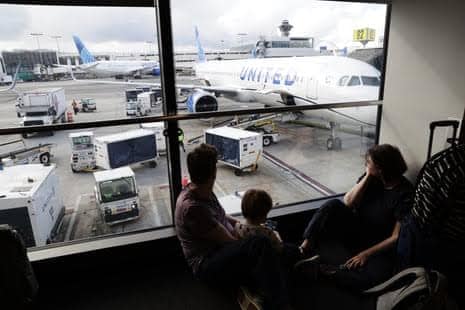
Thousands of flights cancelled, passengers stranded at airports, airlines scrambling to rearrange schedules and a nationwide aviation network struggling to get back on its feet. The United States witnessed a major aviation disruption beginning November 13, after a technical failure in the Federal Aviation Administration’s (FAA) air traffic control communication network forced authorities to ground flights across the country.
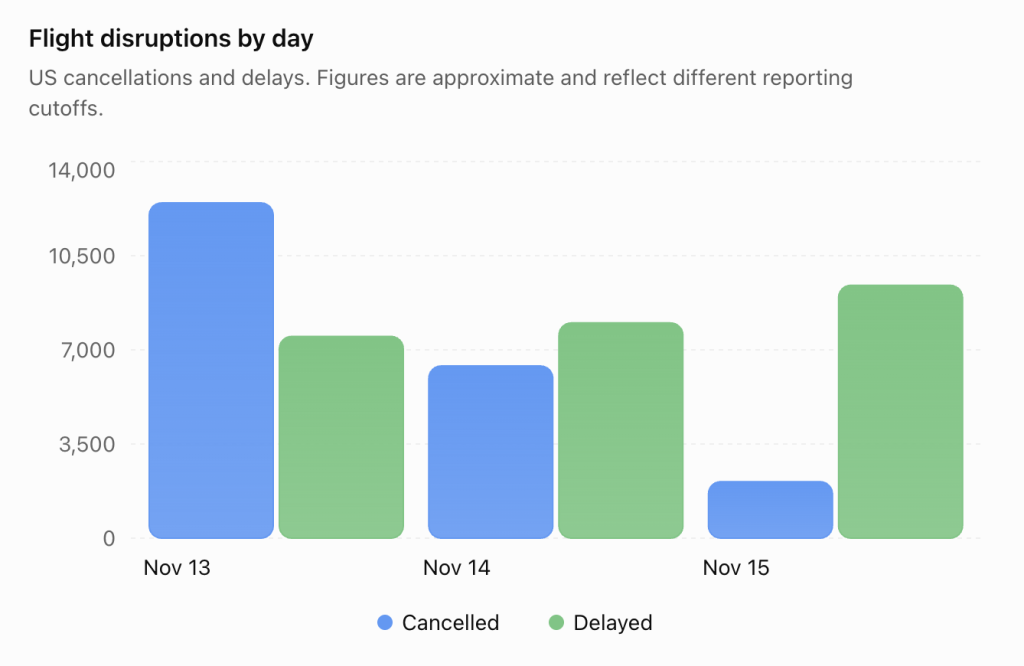
Between November 13 and 15, approximately 42,600 flight operations were affected across the United States, including 17700 cancellations and 24900 delays.
What makes this incident particularly concerning is that it wasn’t caused by a major storm, a terrorist attack or even a cyberattack. A technical problem involving routers and the FAA’s ageing telecommunications infrastructure was enough to disrupt one of the world’s busiest aviation networks.
So, what exactly happened?
On November 13, the FAA experienced a major technical failure affecting its air traffic control communications network. The problem impacted 17 of the country’s 22 en-route air traffic control centres, which coordinate aircraft movements across large sections of American airspace. “We began experiencing instability at 17 of our 22 Air Route Traffic Control Centers, and it spread into several Terminal Radar Approach Controls. Out of an abundance of caution, we implemented a nationwide ground stop to ensure the safety of the flying public,” stated the FAA on its official website.
With communications and radar systems experiencing instability, the FAA ordered a nationwide ground stop at approximately 3:30 PM Eastern Time. This meant departing flights across the United States had to remain on the ground until authorities could establish that air traffic operations were safe.
The restriction was eventually lifted at around 8:15 PM. Thousands of aircraft that were already airborne landed safely, but the disruption had already begun spreading across the aviation network.
How did a router cause such a massive disruption?
According to the FAA’s preliminary investigation, the disruption was linked to an unusual surge in data traffic across its telecommunications network. The agency reported receiving approximately 1,000 connection attempts every four to five seconds, which destabilised its ageing infrastructure and affected aircraft communications and radar feeds. US Transportation Secretary Sean Duffy also stated the same.
Investigators identified two potential sources of the excessive data traffic: a radar facility in Amarillo, Texas, and a radio communications facility in El Dorado, Arkansas. At the Arkansas facility, FAA network contractor L3Harris had been working on replacing older telecommunications infrastructure and deploying a new router. The company and the FAA are investigating whether the problem originated from the equipment, its installation or another technical issue. The exact root cause has not yet been established.
The FAA subsequently isolated the affected locations and disabled a broadcasting function on approximately 60 similar routers as a precaution. “We believe we have addressed the initial cause of the disruption by immediately disabling the functionality of the originating routers. As a precaution, we disabled the same functionality on approximately 60 similar routers in the system,” stated the FAA in its official statement.
In simple terms, the system responsible for helping air traffic controllers communicate and coordinate aircraft movements experienced a technical overload. When authorities could not guarantee the reliability of these systems, grounding flights became the safest option.
Why were flights still getting cancelled after the ground stop was lifted?
This is where things get interesting. Even though the FAA lifted the nationwide restriction on November 13, the aviation network could not immediately return to normal.
Airlines operate on carefully coordinated schedules. Aircraft fly multiple routes every day, and pilots and cabin crew have specific duty-hour limitations. When thousands of flights are grounded or delayed, aircraft end up in the wrong airports, crews miss their subsequent schedules and passengers miss connecting flights.
This creates a domino effect.
For instance, an aircraft scheduled to fly from New York to Chicago might be delayed because of the shutdown. That same aircraft could have been scheduled to fly from Chicago to Los Angeles later in the day. Even after the original restriction is lifted, the second flight could still be cancelled because the aircraft and crew are not available.
By November 16, authorities expected operations to return to normal, although airlines were still dealing with the accumulated disruption.
Is this a cyberattack?
There is currently no evidence suggesting that the incident was caused by hackers or deliberate sabotage. The preliminary findings point towards a technical failure involving the FAA’s communications infrastructure.
However, the incident has raised a much bigger question about the state of America’s aviation infrastructure.
The US Government Accountability Office had already flagged concerns about ageing FAA technology. Its 2024 assessment identified 105 out of 138 FAA air traffic control systems as unsustainable or potentially unsustainable. In other words, a significant portion of the technology supporting American aviation requires replacement or modernisation.
Transportation Secretary Sean Duffy has pushed for additional funding, including a proposed $50 billion modernisation effort. But the proposal has also triggered political questions about existing allocations and how effectively the money is being spent.
What does this mean for the US?
The immediate crisis appears to have been contained, but the incident exposes a serious vulnerability in critical infrastructure. America’s aviation network is not just about airports and aircraft. It depends on a complicated system of communications networks, radar technology, software and air traffic controllers working together.
A failure in one part of this network can have consequences across the entire country.
For a country that handles millions of passengers and thousands of flights every day, the November 13 incident is a reminder that even the world’s most advanced aviation systems are only as reliable as the technology supporting them.
Latest Articles






Tags USA