 Gulte Movie News And Politics
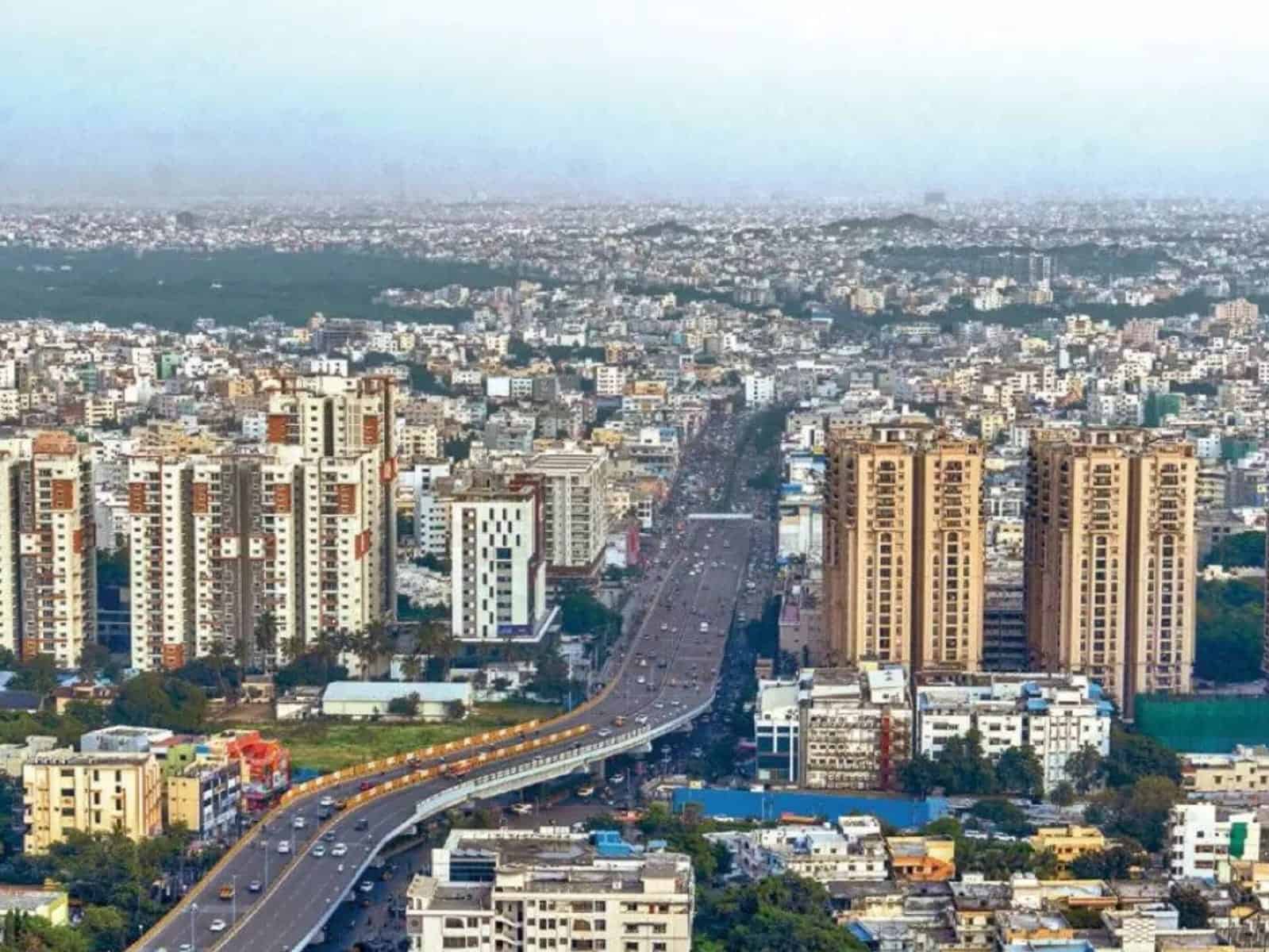
Hyderabad’s experiment with one-way traffic around KBR Park is now providing the template for another major traffic-management proposal. Cyberabad Traffic Police, in collaboration with the Society for Cyberabad Security Council (SCSC), are exploring a continuous one-way loop connecting Biodiversity Junction, IKEA Rotary, Mindspace, Knowledge City and Dallas Centre. The objective is to reduce congestion at four major bottlenecks and improve vehicle movement during morning and evening office hours. However, before the arrangement is introduced in one of Hyderabad’s busiest IT corridors, there is an important question: did the KBR Park experiment actually solve traffic congestion, or did it merely make traffic move differently?
The one-way arrangement around Kasu Brahmananda Reddy (KBR) National Park was introduced on August 18, 2026, amid infrastructure works under the H-CITI project. The approximately six-kilometre loop reorganised traffic movement around the park, allowing vehicles to move continuously in one direction instead of negotiating multiple conflicting movements at junctions. But the first day was far from smooth. Motorists encountered unfamiliar diversions, confusing lane changes and long queues around Jubilee Hills Check Post, Road No. 45, Agrasen Junction and the Basavatarakam Hospital stretch.
A road test found that a five-kilometre journey that normally took 10–15 minutes took approximately 45 minutes on the first day, with traffic moving at an average speed of just 7 kmph. The initial disruption showed how changing traffic direction without commuters being fully familiar with the new routes could create fresh bottlenecks.
Things appeared to improve over the next few days. By August 28, commuters were reported to have said traffic was moving more smoothly, with fewer stop-and-go situations and less congestion at several stretches. However, the improvement came with a trade-off. Some motorists had to travel longer distances to reach destinations that were previously accessible through shorter routes. Confusion over lane changes persisted near Study Circle, Journalist Colony and other junctions, while commuters continued to report slowdowns during evening peak hours, particularly between 7 pm and 10 pm.
The authorities themselves recognised that the new arrangement needed supporting infrastructure. On September 2, Hyderabad’s police and civic officials inspected the corridor and identified stretches requiring selective road widening, repairs and utility shifting to improve traffic movement. These interventions were planned after officials identified bottlenecks along the one-way route. This was significant because it indicated that changing traffic direction alone was not enough to address every problem.
The more recent picture is even more complicated. On October 28, it was reported that traffic jams were continuing at several locations around KBR Park. The Film Nagar–Journalist Colony stretch, the Cable Bridge approach, Agrasen Junction and the area near the park entrance remained problematic. Confusing lane markings, inadequate signboards and last-minute lane changes were contributing to congestion. Some motorists travelling towards Jubilee Hills Check Post were also being forced to take longer detours after entering the wrong lane. Uneven road levels and poorly designed turning points added to the problem.
The KBR experience, therefore, is not a straightforward success story. While the initial adjustment period resulted in smoother movement along parts of the corridor, persistent junction-level problems have shown that a one-way loop cannot compensate for inadequate road design, unclear diversions and poorly managed entry and exit points. The civic administration has also continued reassessing the H-CITI infrastructure plan. On October 5, GHMC Commissioner RV Karnan announced a revised ₹1,090-crore proposal involving a unified 4.3-kilometre elevated corridor, indicating that infrastructure interventions remain part of the longer-term solution.
For Hi-Tech City, the challenge could be considerably greater. The proposed loop will connect Biodiversity Junction, IKEA Rotary, Raheja Mindspace’s C-Gate, Knowledge City and Dallas Centre before returning through My Home Bhooja. Unlike the KBR Park stretch, this corridor handles enormous office-related traffic, including company buses, cabs, private vehicles and commuters entering from multiple residential neighbourhoods.
Cyberabad Police Commissioner M. Ramesh has said that traffic simulations will be conducted to assess vehicle speeds and traffic density before the proposal is finalised. Consultations with IT companies and other stakeholders are also planned, with implementation expected in phases. No implementation date has been announced.
The KBR experiment offers a useful starting point, but not conclusive proof that one-way systems can solve Hyderabad’s traffic problems. Before making the Hi-Tech City arrangement permanent, authorities need to measure average commute times, vehicle throughput, junction waiting times and the additional distance travelled by commuters. Ultimately, success should not be measured by how smoothly vehicles move along a designated loop, but by whether people actually reach their destinations faster.
Latest Articles






Tags Hyderabad IT Corridor One Way