 Gulte Movie News And Politics

In early August, some property owners in Hyderabad and surrounding districts went to Sub-Registrar offices to sell, mortgage or transfer their properties, only to discover that their land was showing up on the Section 22-A prohibited-properties list. Some were unable to complete their registrations.
What started as a land-records problem has now become a political fight in the Telangana Assembly.
So, what exactly went wrong?
Section 22-A of the Registration Act, 1908, allows governments to prohibit registration of transactions involving certain categories of property, including government, assigned, endowment and waqf land, as well as properties under certain legal restrictions. The purpose is to prevent the illegal sale or transfer of land that cannot legally be transferred.
The controversy in Telangana is over private properties being caught in this prohibited list.
The issue came to light as land records were being updated under the Bhu Bharati system. Reports said old prohibited-property lists had not always been properly updated, while in some cases entire survey numbers were marked as prohibited even though only a portion of the land was actually affected.
Chief Minister Revanth Reddy acknowledged the problem on August 13. He said there were cases where an entire survey number had been included under 22-A even though only two or three acres within it were subject to a court order or government claim. He assured landowners that genuine private land would be allowed to be registered.
Revenue Minister Ponguleti Srinivas Reddy later admitted that errors by officials had caused problems with the list and apologised to affected property owners. He said the government would review the cases and correct the records.
Ponguleti also cited a Jubilee Hills example. According to him, Survey No. 403 covers 1,288 acres, but only two plots had an issue, while the entire survey number was mistakenly placed on the prohibited list. The error was subsequently rectified.
This admission has become central to the BRS and BJP’s attack.
The BRS has been aggressively targeting the Congress government over the issue. Harish Rao had demanded a judicial probe, a white paper and the removal of genuine private properties from the 22 A list. The party also held the Chief Minister and Revenue Minister responsible for the alleged irregularities.
The BRS had warned that it would stall the Assembly and even lay siege to government offices if genuine private properties were not removed from the prohibited list.
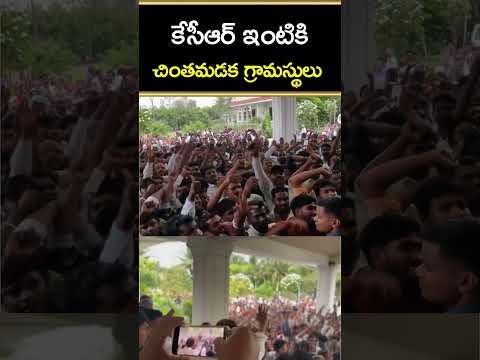
BRS had planned to aggressively take up the Section 22 A issue, but a series of unexpected developments shifted the party’s focus. BRS MLAs were stopped outside the Assembly over their black T shirts with slogans, while a BRS MLC’s alleged remarks against the Speaker triggered another controversy, followed by Congress protests at KCR’s farmhouse. Meanwhile, the BJP stayed focused on Section 22 A inside the Assembly, keeping the issue at the centre of the political debate.
The BJP says simply correcting individual properties is not enough. It wants a judicial inquiry by a sitting High Court judge to establish how private properties ended up on the list and whether there was any deliberate manipulation or corruption. BJP leaders have made these allegations, but they have not been established as facts.
The issue erupted in the Assembly on September 7, when BJP MLAs entered the Well demanding a judicial probe. The government said it was ready for a discussion, but the BJP insisted that an inquiry was necessary, disrupting proceedings.
On September 8, there was some movement. The Business Advisory Committee (BAC), the Assembly committee that decides the House’s programme and allocates time for discussions, agreed to take up the 22-A issue for discussion. The BJP participated in the BAC meeting but continued to demand a judicial inquiry and a disclosure of the government’s forensic audit.
So the political battle is now clear.
The Congress government says the mistakes can be identified and corrected through the administrative process. The BJP, meanwhile, wants an independent investigation into how the mistakes happened, who was responsible and whether there was anything more than administrative negligence involved.
What began with property owners discovering registration problems has now become one of the major political flashpoints of the Telangana Assembly session.
Latest Articles



Tags 22-A